

Table of Contents
- Essential Safety Equipment for Youth Sports Teams
- How to Choose the Right Youth Baseball Gear
- Team Uniforms and Sport-Specific Apparel
- Youth Sports Gear Organization Ideas for Teams
- Best Practices for Team Uniform Care and Maintenance
- Tournament Day Preparation Checklist
- Budgeting and Managing Team Gear Costs
- Frequently Asked Questions
Last Updated: September 27, 2026
Essential Safety Equipment for Youth Sports Teams
Safety is the foundation of any youth sports team gear checklist. Protective equipment that meets current standards and addresses your sport's specific demands prevents injuries and demonstrates commitment to player welfare.
Sport-specific gear varies: baseball teams need batting helmets with face guards, catcher's protective equipment, and fielding gloves; volleyball players need knee pads and ankle support; soccer teams need shin guards and ankle-stable footwear. All teams should stock a sideline first aid kit, hydration stations, and ice packs.
According to CDC guidance on youth sports safety, concussion prevention protocols are now essential for all youth sports programs. This means coaches need baseline concussion education and clear procedures for recognizing potential head injuries. Many teams now include neck strengthening exercises in their training regimen as a preventive measure.
For high-contact sports, invest in quality elbow pads, wrist guards, and shoulder protectors to reduce abrasion injuries. Outdoor teams should add sun protection: sunscreen, wide-brimmed hats, and lightweight long-sleeved options prevent heat illness and UV damage.
How to Choose the Right Youth Baseball Gear
Selecting youth baseball gear requires balancing protection, comfort, and performance while managing costs.
Batting helmets are non-negotiable. Choose helmets meeting NOCSAE standards with proper fit, level on the head with face guard protecting without obstructing vision. Mid-range helmets ($40-80) offer better durability than budget options.
Glove size varies by position: infielders use 11-12 inches, outfielders 12-13 inches, pitchers prefer smaller gloves. Families should invest in personal gloves that fit properly, then organize a gear-swap system for specialty positions.
Batting equipment includes bats, batting gloves, and protective gear. Avoid choosing bats that are too heavy or long, the barrel should reach the player's hip when held at the end with one hand. Composite bats cost more than aluminum but offer better durability. Batting gloves ($15-25) improve grip and reduce hand fatigue.
Choose cleats or turf shoes based on field conditions. Baseball cleats provide traction for cuts and base running; turf shoes prevent ankle injuries on artificial surfaces. Hand-me-downs and community gear-swaps reduce individual costs.
Team Uniforms and Sport-Specific Apparel
Quality uniforms create team identity and professionalism while helping coaches identify players during tournament play.
Prioritize moisture-managing fabrics that resist fading. Polyester blends ($15-25 per jersey) resist fading better than cotton and dry faster between tournament games. Performance fabrics with moisture-wicking technology keep players cool.
Customization options include embroidered names and numbers, screen-printed logos, and team colors. TravelBallandmore offers custom team gear with logo application and performance-focused jerseys designed specifically for young athletes. Their lightweight fabrics keep athletes cool and focused during long tournament days, with striking colors achieved through cutting-edge printing techniques.
Teams need coordinated practice wear that reinforces team identity and simplifies equipment management for parents.
Spirit wear extends team identity and builds community. The Youth Hooded Team Sweatshirt from TravelBallandmore ($33.99) offers a 50% cotton and 50% polyester blend with kangaroo pocket and embroidery options for post-game celebrations or cool-weather tournaments.

Consider implementing a sizing standard across your team. Inconsistent sizing creates frustration and requires reorders mid-season. Many coaches use a shared sizing chart that all families reference when ordering, reducing the need for exchanges and speeding up delivery timelines for tournament preparation.
Youth Sports Gear Organization Ideas for Teams
Systematic organization of youth sports team gear prevents lost equipment, reduces duplicate purchases, and saves time and money.
Create a master inventory spreadsheet listing equipment, storage location, condition, and replacement timeline. Assign one parent to manage it, rotating yearly to distribute workload.
Establish centralized storage, a rented unit or team parent's garage, for shared equipment like hydration stations, first aid kits, and backup gear. Label everything with team name to prevent loss and ensure accessibility.
Implement a hand-me-down and gear-swap system via shared document or group chat. Organize quarterly swap events where families exchange outgrown equipment, reducing costs and building community.
Organize a sizing chart before ordering apparel to prevent inconsistent sizing and mid-season reorders. Order 10-15% extra inventory to account for growth and damage.
Best Practices for Team Uniform Care and Maintenance
Proper uniform maintenance extends the life of your youth sports team gear and keeps players looking sharp throughout the season. Uniforms represent your team's professionalism, and well-maintained gear reflects that commitment.
Establish clear washing instructions for all families. Most performance fabrics should be washed in cold water with mild detergent, then air-dried to prevent shrinkage and fading. Heat damages elastic and weakens seams, so avoid dryers when possible. Many teams create a one-page care guide they distribute with new uniforms, ensuring consistency across families.
Address stains immediately. Grass, dirt, and sweat stains set permanently when exposed to heat, so pre-treat before washing. For stubborn stains, soak uniforms in cold water with enzyme-based stain remover before washing. This prevents the need for replacement jerseys mid-season.
Inspect uniforms regularly for wear. Check seams, elastic, and printed graphics before each tournament. Small repairs, reinforcing loose seams or reattaching elastic, prevent minor issues from becoming uniform failures during competition. Many teams designate one parent as the uniform maintenance coordinator who inspects and repairs items between tournaments.
For embroidered names and numbers, avoid washing in hot water or using bleach, which can fade or damage stitching. The embroidery quality directly impacts how long your youth sports team gear lasts. TravelBallandmore's jerseys feature durable embroidery, addressing a common complaint from teams using lower-quality providers.
Rotate uniforms when possible. If your team has multiple jersey colors, rotating between them gives each uniform time to rest and dry completely between games. This extends the lifespan significantly compared to using the same jersey for consecutive tournament days.
Store uniforms in a cool, dry location. Moisture promotes mold and mildew, while heat degrades fabric and elastic. Many teams use breathable storage containers rather than sealed plastic bags, allowing air circulation that prevents odor and deterioration.
Tournament Day Preparation Checklist
Tournament day success depends on preparation that starts days before competition. A comprehensive checklist ensures nothing gets forgotten when families are managing multiple children and early wake-up times.
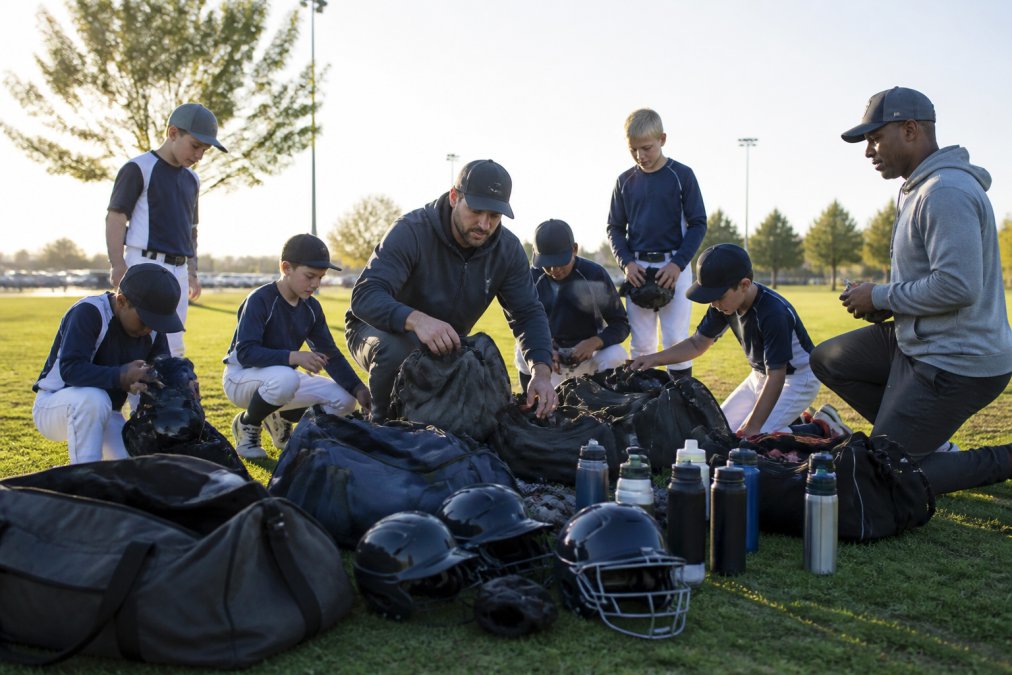
Create a master tournament checklist one week before competition. Include uniform pieces (jersey, pants, socks, cleats), protective gear (helmet, gloves, guards), personal items (water bottle, towel, sunscreen), and team supplies (first aid kit, ice packs, backup equipment). Distribute this checklist to all families at least five days before the tournament so they have time to address any missing items.
Verify sizing and fit the night before.
Budgeting and Managing Team Gear Costs
Managing youth sports team gear expenses requires strategic planning and creative solutions that don't compromise quality or safety. Most families appreciate transparency about costs and options for reducing individual expenses.
| Cost Category | Typical Annual Cost | Budget Strategy |
|---|---|---|
| Uniforms (2-3 sets) | $75-150 per player | Group order for volume discount |
| Protective gear | $50-100 per player | Share specialty items; rotate hand-me-downs |
| Practice wear | $25-50 per player | Families purchase individually |
| Spirit wear | $20-40 per player | Optional; organize group order |
| Team supplies | $200-400 total | Shared cost across all families |
Frequently Asked Questions
What gear does a youth athlete need for their first season?
First-season athletes need sport-specific protective gear, a well-fitting uniform, moisture-wicking base layers, sport-appropriate footwear, and a practice bag with essentials like a water bottle and towel. Safety equipment like mouthguards, helmets, or padding depends on the sport. Check your league's mandatory equipment list to ensure compliance with safety standards.
How should I organize youth sports team gear for travel tournaments?
Create a detailed inventory system tracking each player's gear by size and name. Use labeled storage bins or drawstring bags for easy identification during travel. Assign a team parent to oversee equipment inventory before and after events. Digital inventory management tools help coaches track items across multiple tournaments. Keep emergency replacement gear in a separate kit for unexpected damage or loss during competition.
How often should youth sports equipment be replaced or rotated?
Protective gear like helmets and mouthguards should be replaced according to manufacturer guidelines, typically every 3-5 years or after significant impact. Cleats and athletic shoes last 1-2 seasons depending on wear. Uniforms and practice apparel can be rotated seasonally to extend their lifespan. Inspect all equipment regularly for damage, worn padding, or compromised safety features before each season or tournament.
What's the best way to prevent concussions and manage youth sports safety?
Proper protective gear including correctly fitted helmets is essential for concussion prevention. Ensure all equipment meets current safety standards and is age-appropriate. Coaches should enforce proper technique and rule compliance. Teams should have a concussion action plan in place and know how to recognize symptoms. Parents and coaches working together create the strongest injury mitigation strategy for young athletes.
How do I handle sizing issues when ordering custom team jerseys?
Collect accurate measurements from all team members before ordering custom jerseys. Use a sizing chart that accounts for different body types and preferences for fit. Order samples in key sizes to verify accuracy before placing large team orders. Work with providers who offer clear return or exchange policies for sizing discrepancies. Building a 2-3 week buffer before tournaments prevents last-minute scrambling if adjustments are needed.
What should be in a youth sports practice bag?
Pack a practice bag with sport-specific apparel, extra socks, a water bottle for hydration stations, a towel, basic first aid supplies, and any required protective gear. Include a change of clothes for post-practice comfort. A drawstring bag or gym bag keeps everything organized and portable. Keep the bag stocked between practices so athletes are always ready for training sessions without last-minute scrambling.